E-mail:
tina@yuzechemical.com
Contact: Tina Pan
Email: tina@yuzechemical.com
Wechat: +8618660611992
Whatsapp: +8618660611992
Address: Xinxing Village, Dajiawa Street, Binhai Economic Development Zone,Weifang City ,Shandong Province,China.
Website: www.wfyuzehg.com
Newcomers to the magnesium chloride industry often confuse anhydrous magnesium chloride and hexahydrate magnesium chloride. Below, Yuze, a professional magnesium chloride manufacturer, gives you a detailed introduction:
Item | Anhydrous Magnesium Chloride MgCl₂ | Hexahydrate Magnesium Chloride MgCl₂·6H₂O (Mainstream in the Market) |
Effective MgCl₂ Content | 98~99.5% | 43~47% (46% commonly used) |
CAS No. | 7786-30-3 | 7791-18-6 |
Appearance | White powder, flakes or lumps; extremely hygroscopic | Flakes, granules, powder; white flakes / ordinary flakes |
Features | No crystal water; releases intense heat when dissolved in water. Extremely prone to moisture absorption, requiring strict sealing. High storage difficulty and higher cost. | Contains 6 molecules of crystal water;weaker deliquescence than anhydrous type,mild dissolution. Low price and abundant supply in the market. |
Application Scenarios | Electrolytic production of magnesium metal, precision catalysts, desiccants, chemical reactions with strict water control in systems. | Most applications: de-icing agents, magnesia building materials, feed, food brine, aquaculture,dust suppression, water treatment, magnesium fertilizer. |
Quick Selection Tip | Choose anhydrous magnesium chloride only when your process cannot tolerate water or high magnesium concentration is required. For most common applications including solution preparation, de-icing, breeding, tofu production, magnesia cement, building materials and wastewater treatment, hexahydrate magnesium chloride is preferred. | |
Note: Hexahydrate magnesium chloride starts dehydration above 95℃; it decomposes and releases HCl above 135℃. Do not use hexahydrate magnesium chloride arbitrarily in high-temperature processes.
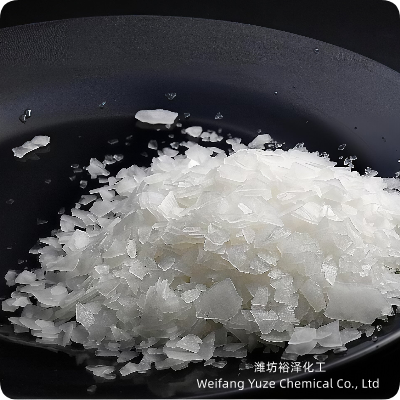
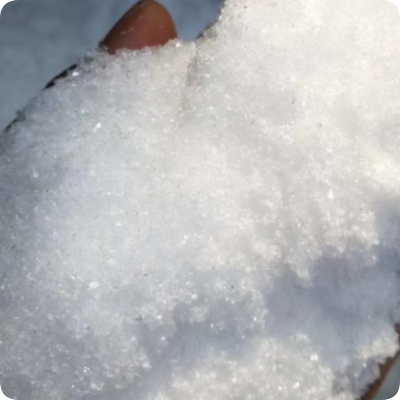
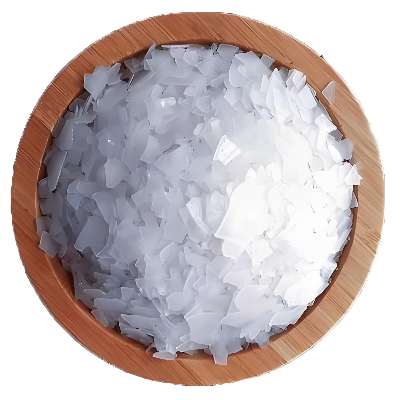
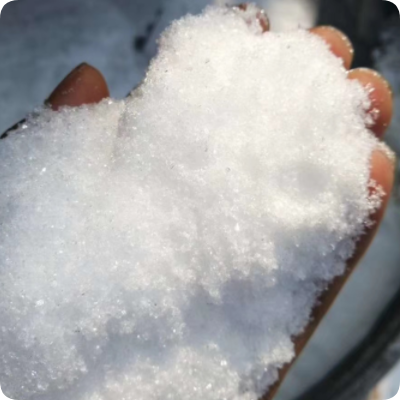
Hexahydrate magnesium chloride is available in granules, powder, brine flakes and white flakes.
1. Ordinary by-product hexahydrate magnesium chloride flakes: Mostly brown in color. Manufactured by reprocessing waste residues from other production processes such as potassium nitrate and pharmaceutical intermediates. Very low price with quality matching its low cost.
2. Natural brine flakes: Produced by boiling brine; yellowish appearance. Content: 42~46.3%. Relatively high impurities (iron, sulfate). Used for general industrial purposes with moderate price. Meets most regular requirements but tends to cake easily.
3. Hexahydrate magnesium chloride white flakes (46% white flakes, acid synthesis method): Refined from hydrochloric acid and magnesium oxide. Pure white and transparent with clear aqueous solution. Low impurities and strictly controlled heavy metals. Widely used for export, food grade, feed grade, high-end aquaculture, bath salts and fine chemicals. Higher price than ordinary brine flakes.
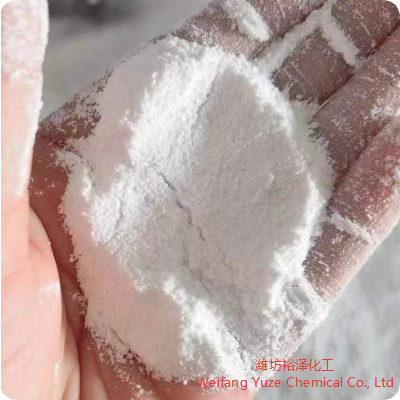
4. Powdered hexahydrate magnesium chloride: Fast dissolution rate. Drawbacks: heavy dust and easy caking. Suitable for rapid liquid preparation, liquid formulations and feed premix. Dust-proof measures are required during feeding.
5. Granular hexahydrate magnesium chloride (spherical brine granules, 2–5 mm): Low dust, good fluidity and less caking. Convenient for spreading applications. Used for de-icing agents, desiccants, etc.
For anhydrous magnesium chloride: A simple rule applies. Except for customers processing anhydrous magnesium chloride lumps on-site, over 90% industries adopt anhydrous magnesium chloride powder.
Even for hexahydrate white flakes, grade is not determined by appearance color, but by test indicators and production qualifications. Industrial-grade white flakes cannot be falsely sold as food grade or feed grade.
Grade | Applicable Standard | Key Control Items |
Industrial Grade | QB/T2605 | Only MgCl₂ and water-insoluble substances are controlled; loose heavy metal limits, relatively high calcium, sodium and sulfate content. |
Feed Grade | Feed Additive Standard | Strict limits on lead, arsenic, cadmium, mercury, iron and sulfate. Microbial safety guaranteed; safe for animal oral intake. |
Food Grade | GB 25584 | Strictest heavy metal limits (Pb ≤1 mg/kg, As ≤0.5 mg/kg). Ultra-low water-insoluble substances plus microbial indicators. |
Important Reminder: Industrial-grade hexahydrate magnesium chloride white flakes only look white, yet they fail heavy metal specifications. They are strictly prohibited for direct use in food, feed and aquaculture seedling breeding. Request COA test reports and check heavy metal items before purchase.
· Low budget with loose quality requirements → ordinary by-product hexahydrate magnesium chloride flakes
· White appearance and low impurities required, strict color demand → white flakes
· Automatic feeding, dust control and anti-caking for long-distance transport → granules
· Fast dissolution and on-site solution preparation → powder
In most cases, your technical team will provide detailed technical parameters before procurement. You can send these parameters to the magnesium chloride manufacturer for tailored recommendations.
Next: No Information